Join Us
Sign up to stay informed of the latest news from Cristianime i Justícia.
This booklet compares the texts contained the book The Teaching of Buddha with the social justice texts of the prophets (culminating in Jesus as one who is “more than prophet”). Despite the differences between the two sets of texts, the author defends the need to understand that they are complementary languages and that neither of them can be maintained or can reach fulfillment without the other. Every outcry of protest that does not flow forth from the interior richness of an authentic “silence” will be “political” but not prophetic. Every silence that does not result in an anguished outcry and a prophetic denunciation will be an empty silence.
After the novel and the film called “The Da Vinci Code”, the Gospel of Judas, that is a text quite pleasant, appears among best sellers books. The sales of “The Da Vinci Code” are countless. Is this fact singe of intrinsic values, of exciting curiosity, or of citizens vulnerability in front of medias? This booklet tries to answer all these questions.
In the face of the hells created by violence, oppression, and repression, the victims of injustice seem to have no other alternative than fight (action-reaction) or flight (silent submission). This booklet explores the “third way” of Jesus, which goes far beyond those two options. This “third way” is the path of active non-violence, a path that requires great lucidity, creativity, faith, and constancy. It comes out of a long biblical tradition, and it acquires special meaning in the context of our present-day society. [In addition to the translation into Catalan and Spanish that you can find on this website, the text has been translated into German, which you can find at this link].
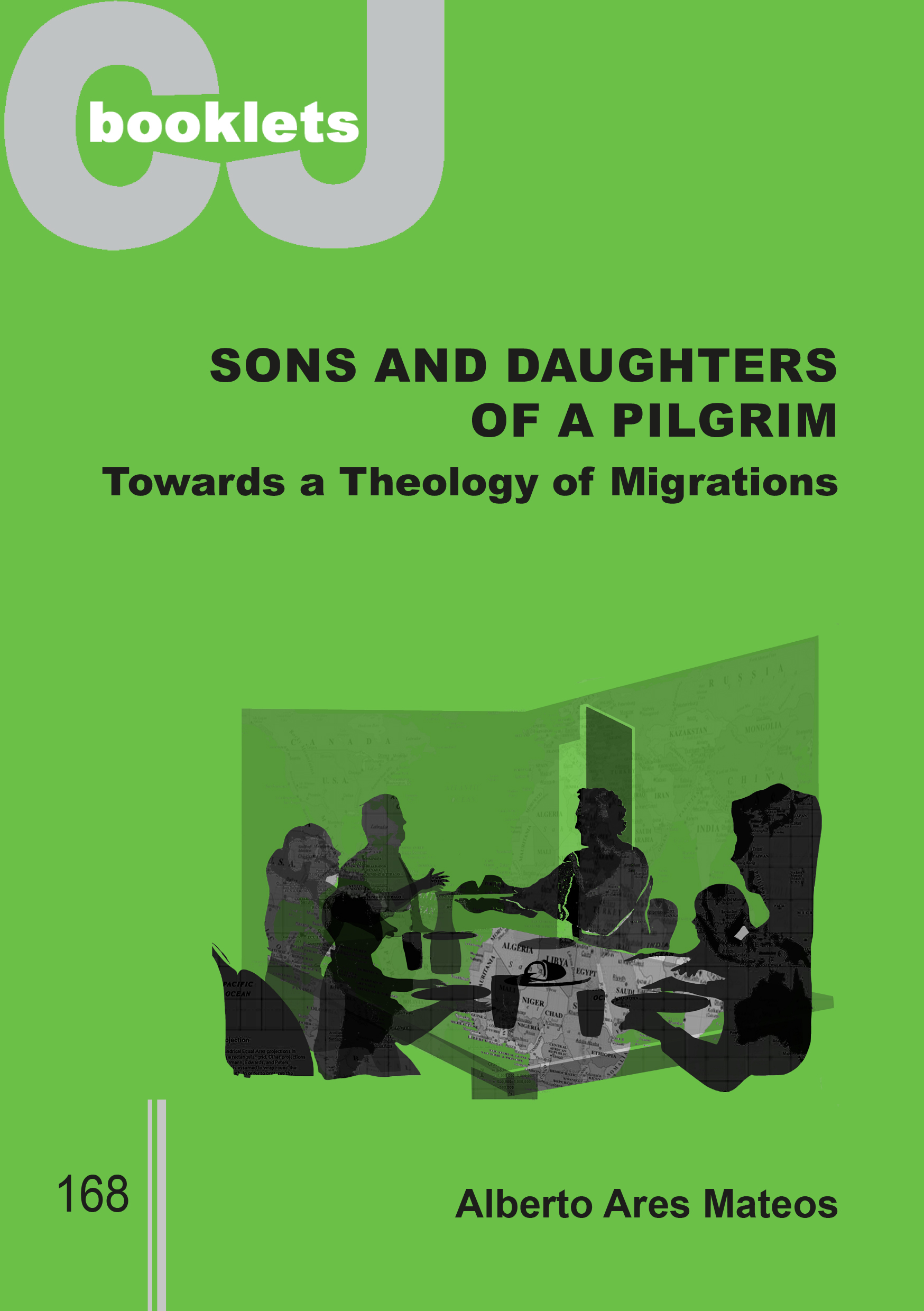
Given that the worldwide movement of migrants and refugees is a “sign of the times,” the situations that give rise to this reality cannot remain on the margins of theological reflection. Responding to this need is the theology of migrations, a new discipline grounded in biblical tradition and the magisterium. The author of the present booklet examines this pressing concern in depth, highlighting the five most important issues for our day and age: identity, dignity, justice, hospitality, and integration.
The economy is set in such a way that advantages are enjoyed by a minority of privileged whilst the inconvenients affect a mayority of desperate people. Thus, the privileged get dehumanised because they are only acquainted with ‘exchange values’; and what makes us really human (reason, equality and solidarity) are not ‘exchange values’ but values of another type. And so, the empoverished also get dehumanised because they live in a constant stroke to avoid drowning in the inmense sea of material needs. Taking as a reference Varoufakis’ book, “Talking to my daughter about the economy. A brief history of capitalism”, González Faus reflects on the anthropological and theological consequences of the actual economic system.
Eschatology is concerned with the 'beyond'. Politics, on the other hand, deals with this world, in its public dimension. Politics and eschatology are intimately linked: the former, because without the ultimate goal of a common good present dispensations degenerate into mere bureaucracy ; the latter, since invoking a Heaven that demands no historical transformation 'on Earth' is mere escapism and phoney spirituality.
Morning, 9h to 14h
(from monday to friday)
Afternoon, 16h to 19h
(tuesday and thursday)