Join Us
Sign up to stay informed of the latest news from Cristianime i Justícia.
The sociologist Rafael Diaz Salazar offers to us in "Towards Post-capitalism" an essay that attempts to shed light fin order to orient us as we transition into post-capitalism. He does it by suggesting a dialogue between cultures of faith and justice that are nourished by different sources but who desire to learn from one another. The booklet covers the dialogue among Christians, Marxists and eco-socialists and, as the author himself explains, it is inserted into the proposal of Pope Francis concerning the culture of the encounter between persons of good will who have as their common goal the emancipation of the impoverished and of ecology.
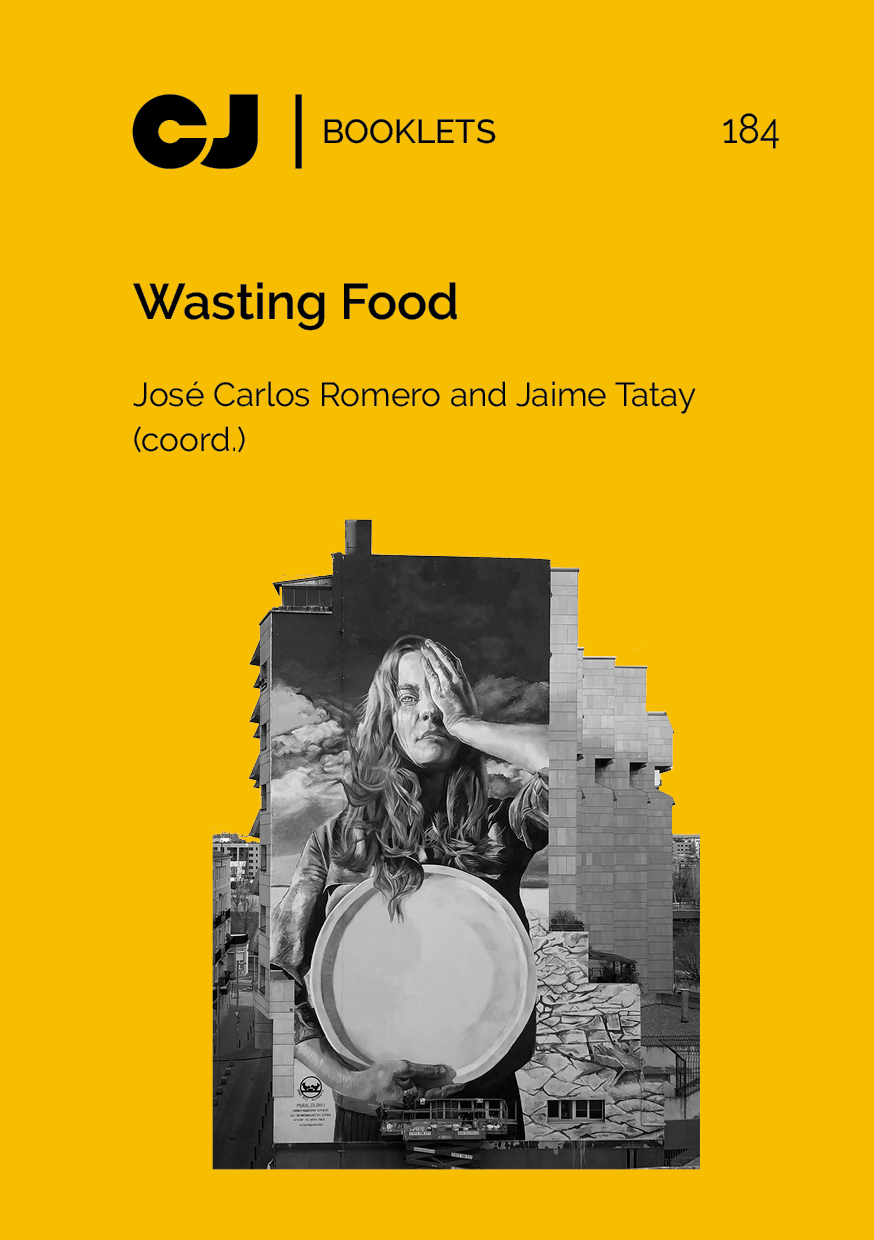
The trip made by food to our tables and to our garbage bins (if we don’t eat it), does not take place now in an isolated manner. We should understand that our relationship with food and the wasting of food affects the lives of the people of our planer, both of those who go hungry and of those who are poisoned by what we throw away. For that reason, the wasting of food falls into the category of sacrilege and finding a solution is turned into a question that affects not only the economy and health, but also religious and spiritual life. That is what is explained to us in this Pamphlet. The authors are members of the Higher Education for Social Transformation Project (HEST), promoted by the Conference of Jesuit Provincials of Europe (JCEP) and the Kircher Network.
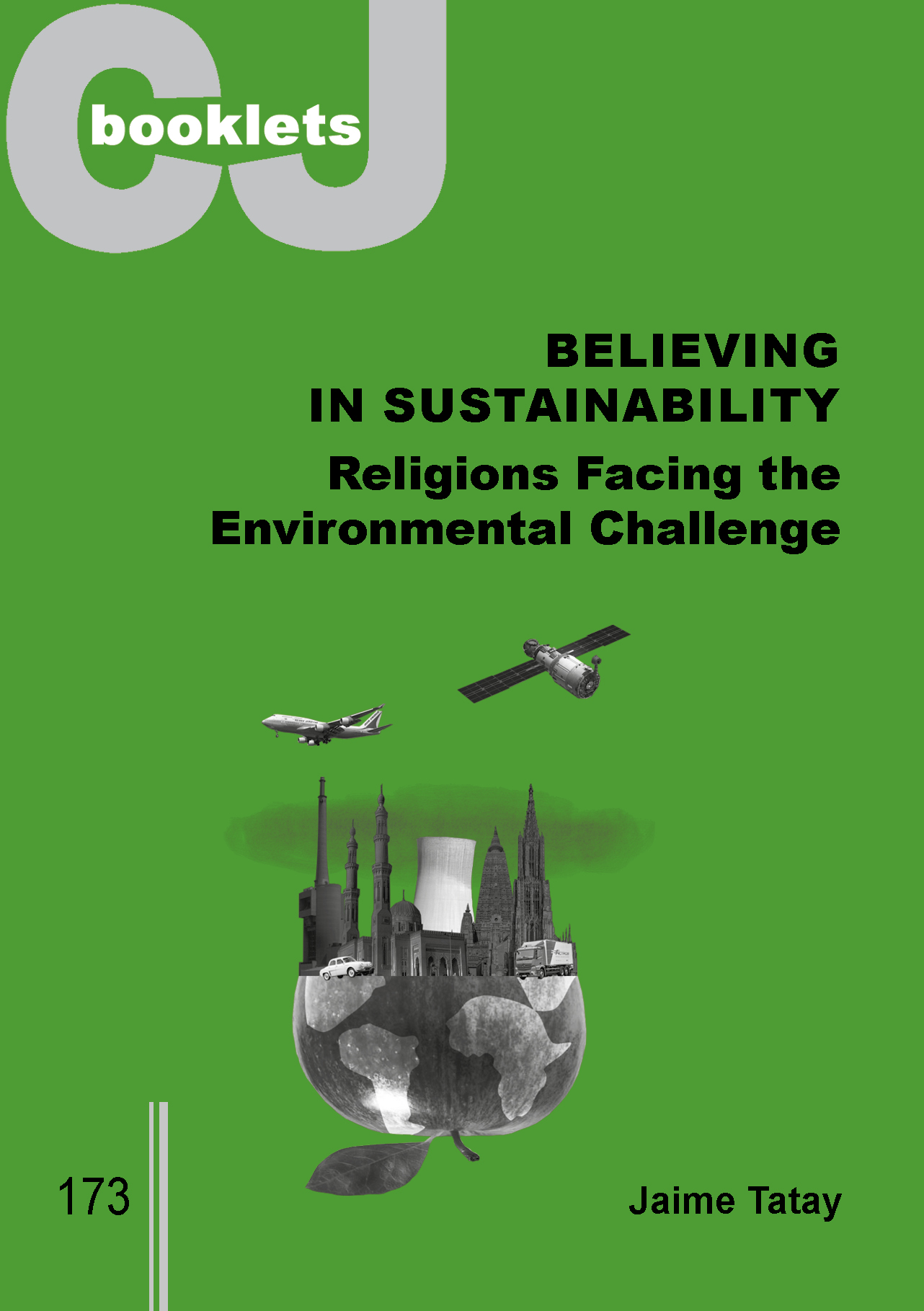
In this essay the author proposes ten reasons for involving the world’s religions in the environmental debate. The ten reasons offer important keys for understanding the religious declarations of recent years as valid strategies for personal, institutional, and social transformation. The author seeks to open up the prophetic, ascetical, penitential, apocalyptic, sacramental, soteriological, mystical, wisdom, communitarian, and eschatological dimensions that pervade the spiritual experience of humankind. The articulation of these ten elements allows us to elaborate an environmental proposal of an interreligious nature.
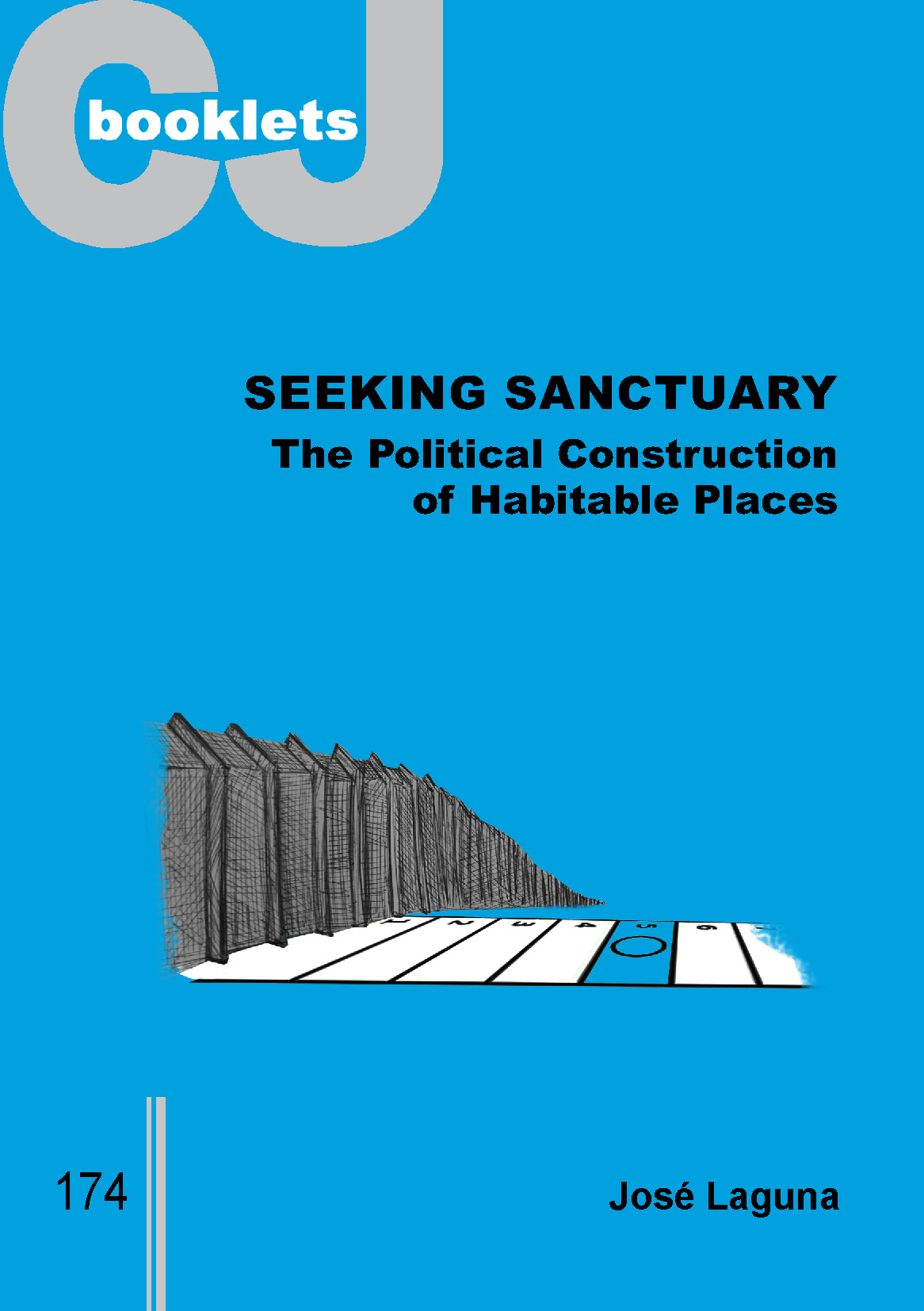
The political construction of places safe from profanation involves defending those “sacred places” we have already established, demolishing dwellings that have become unlivable, and building new multicultural homes that are sustainable and non-discriminatory, recognizing and welcoming negated identities. The author invites us to abandon our passivity and become architects and masons so as to keep the world from ending up “a huge commercial center where every reality carries a sticker price and a bar code.”
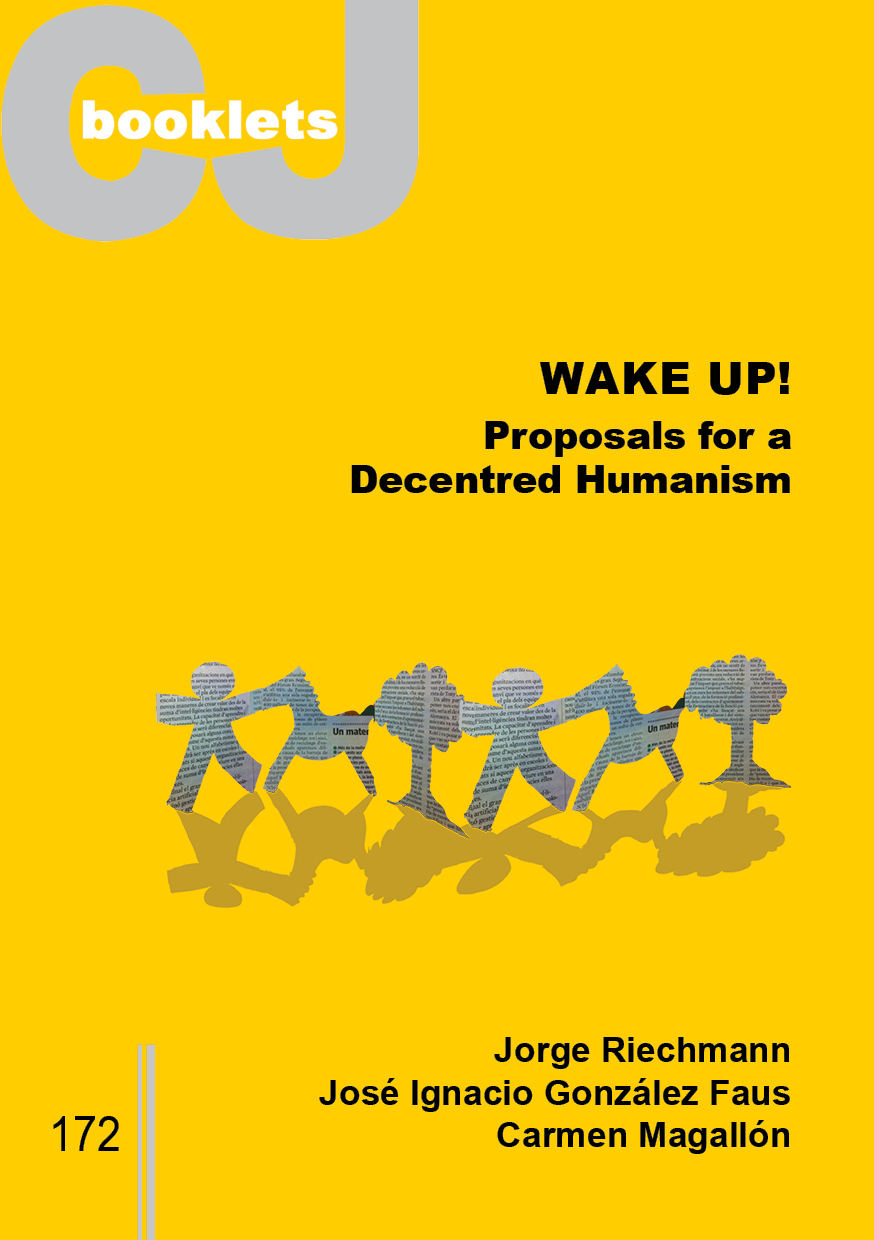
Jorge Riechmann calls the 21st century the “Century of the Great Test,” for he sees it as the century in which the future of the planet and the survival of the human race are at stake. Viewing this challenge from the perspectives of philosophy, theology, and eco-feminism, the authors ask about the possibility of changing the current course of our civilization, so that we begin to pursue other goals and promote other values, such as welcoming the stranger, caring for what is fragile, making peace with nature, and accepting ourselves as the vulnerable and mortal beings that we are.
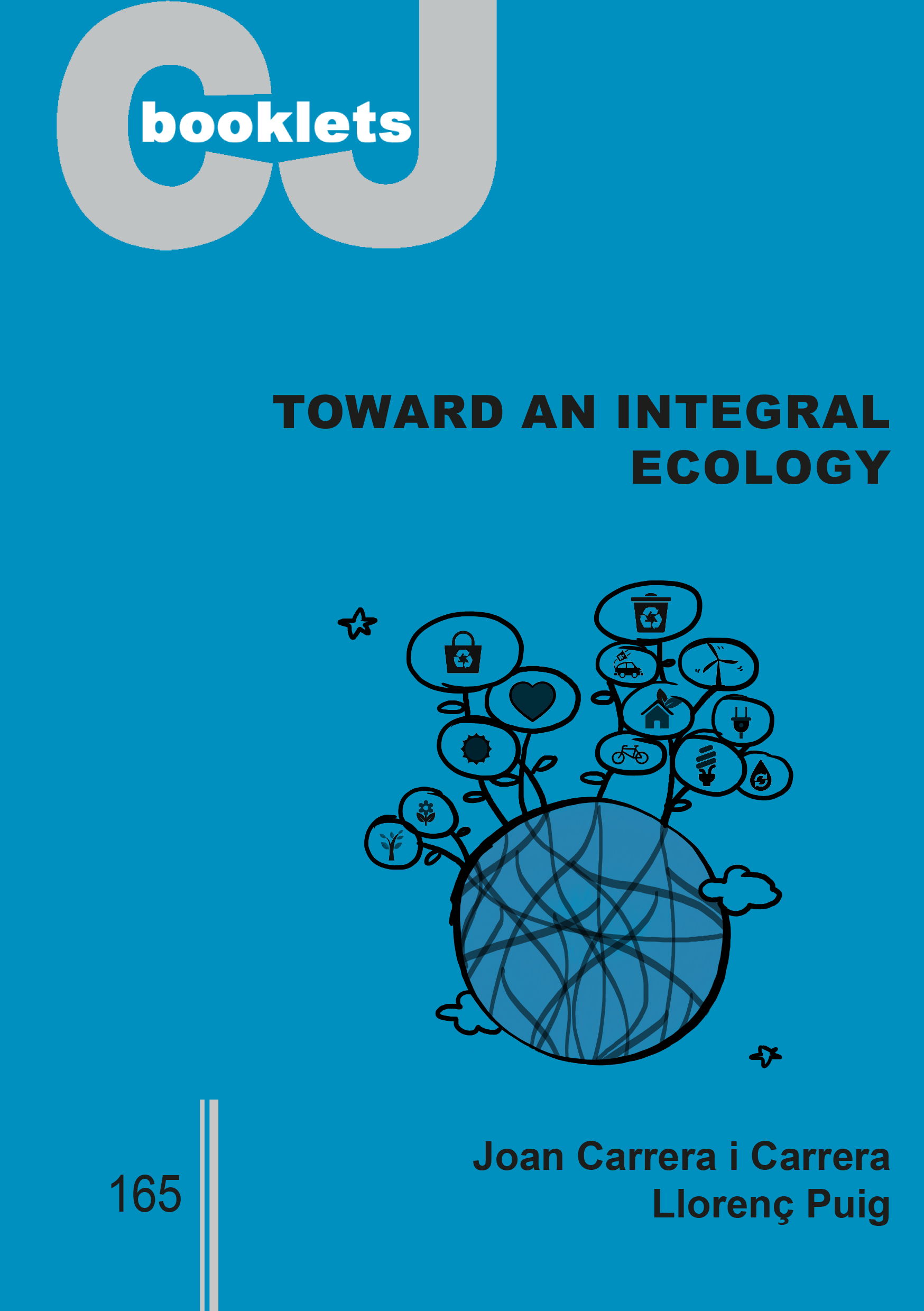
“We are faced not with two separate crises, one environmental and the other social, but rather with one complex crisis which is both social and environmental.” Beginning with this central thesis of Laudato Si´, this booklet presents for us the key ideas and values of the encyclical. It also recommends ways in which we can overcome the justice/environment dilemma since fighting against poverty and caring for the planet are both part of the same struggle. The path toward an integral ecological ethics thus becomes the only possible way out of the dead-end into which we have been led by the present system of production and consumption.
In the thirty-fifth year of its existence, Cristianisme i Justícia now issues its 200th booklet. We have always sought to kindle hope and feed a widely-shared desire for a world that is more just and more fraternal. In keeping with that desire and alert to the world around us, the present publication aims to provide a clear account of the teamwork in which our Centre is engaged, and a reliable guide to the challenges on which Cristianisme i Justícia reflects now and in the future. We also invite to join us all those engaged in dialogue between faith and the struggle for a juster world.
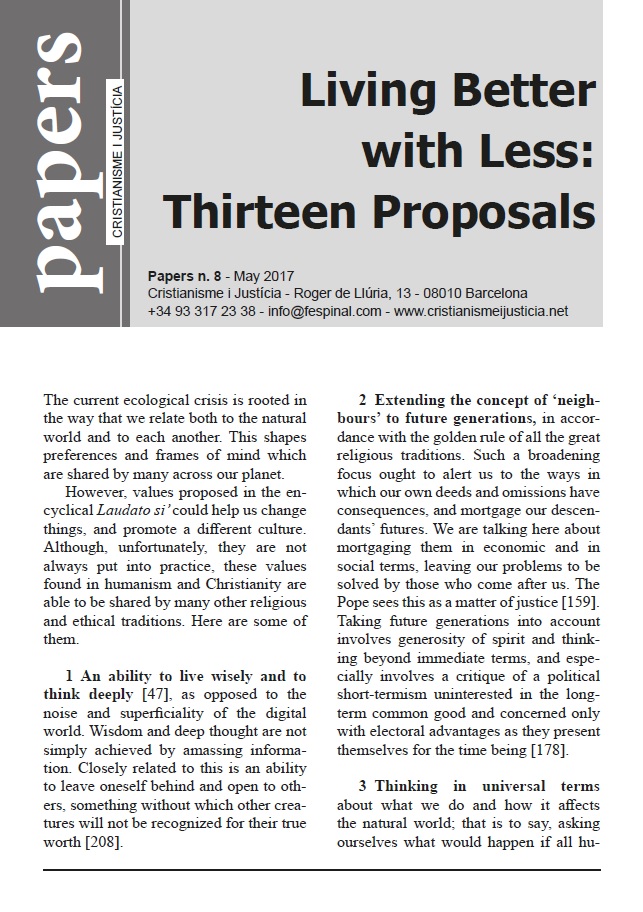
The present environmental crisis has its origins in how we relate to the natural world and to our fellow human beings. Certain values are given priority over others, thereby shaping attitudes widely shared across the globe. The pope's encyclical Laudato Sí’ proposes something different, fresh ways of looking at things, a new culture, based on values that although, sadly, not always acted on, belong equally to humanism and to the Christian tradition, and that can be shared by many other ethical and religious traditions too.
Morning, 9h to 14h
(from monday to friday)
Afternoon, 16h to 19h
(tuesday and thursday)